The Ethical Camper: Navigating the Bruce Trail with a “Leave No Trace” Mindset
The Northern Bruce Peninsula is home to some of the most breathtaking, rugged landscapes in North America. From the towering, ancient limestone cliffs of the Niagara Escarpment to the crystal-clear, turquoise waters of Georgian Bay, it is a region that commands attention and leaves an indelible mark on everyone who visits. For guests staying at Miller’s Family Camp, our pristine location on Miller Lake serves as a central home base for exploring these wonders. The crown jewel of outdoor recreation in our backyard is undoubtedly the Bruce Trail—Canada’s oldest and longest continuous marked footpath.
Spanning over 900 kilometers from Niagara to Tobermory, the Bruce Trail offers unparalleled access to rare ecosystems, dramatic lookouts, and dense, old-growth forests. However, with great natural beauty comes great ecological vulnerability. The peninsula welcomes hundreds of thousands of hikers, campers, and nature lovers every year, and this high volume of foot traffic places an immense strain on the environment. The Niagara Escarpment is a UNESCO World Biosphere Reserve, meaning it hosts delicate ecosystems, rare flora, and ancient geological formations that can take centuries to recover if damaged.
To preserve this incredible wilderness for future generations, every hiker who sets foot on the path must adopt an eco-conscious philosophy. This is where the framework of “Leave No Trace” comes into play. Originally developed to protect backcountry wilderness areas, these seven core principles provide an actionable roadmap for ethical hiking and camping. This comprehensive guide details how to apply a “Leave No Trace” mindset specifically to the unique environment of the Bruce Trail during your stay at Miller’s Family Camp.
Principle 1: Plan Ahead and Prepare
Ethical exploration begins long before you arrive at the trail head. On the Northern Bruce Peninsula, poor planning doesn’t just result in personal discomfort—it directly leads to environmental degradation, trail overcrowding, and localized wildlife disruption.
Understanding Regional Restrictions and Reservations
The popularity of hotspots along the Bruce Trail has forced conservation authorities to implement strict access controls. You cannot simply pull up to major trailheads on a whim during the peak summer months. For example, if you plan to hike sections near the famous Grotto or the stunning cliffs of Lion’s Head, you must secure parking reservations well in advance.
When hikers fail to reserve a spot, they often resort to illegal parking on narrow rural roadsides. This compromises emergency vehicle access, destroys sensitive roadside vegetation, and disrupts local communities. By arranging your itinerary ahead of time and understanding reservation requirements, you minimize your footprint and support structured, sustainable tourism infrastructure.
Packing for the Escarpment’s Demanding Terrain
Proper physical preparation directly influences your ability to practice low-impact hiking. The Bruce Trail along the Northern Bruce Peninsula is notoriously rugged, characterized by uneven limestone rocks, steep drop-offs, and exposed tree roots. If you hit the trail ill-prepared—wearing improper footwear or lacking adequate hydration—fatigue sets in quickly. When hikers become exhausted or injured, they are far more likely to make poor environmental choices, such as cutting across switchbacks, abandoning trash to lighten their loads, or requiring emergency rescue operations that heavily impact local wilderness areas.
Always pack a detailed topographic map, verify the regional weather forecast before departing Miller’s Family Camp, carry a fully charged phone with an external power bank, and ensure you have a minimum of two liters of water per person.
Principle 2: Travel and Camp on Durable Surfaces
The geology of the Niagara Escarpment is a paradoxical mix of hyper-durable rock and incredibly fragile soil and plant life. Every step taken off the designated trail can crush slow-growing plants and contribute to severe soil erosion.
Staying Within the Blazes
The Bruce Trail is exceptionally well-marked with white blazes for the main trail and blue blazes for side trails. Staying strictly within these marked boundaries is paramount. When hikers step off the trail to bypass a muddy patch or to get a slightly better angle for a photograph, they inadvertently widen the trail footprint. This phenomenon, known as “trail braiding,” destroys the surrounding undergrowth and creates parallel paths that scar the landscape.
The soil layers on the limestone cliffs are incredibly thin, often only a few centimeters deep. Once vegetation is trampled and killed, the wind and rain quickly wash this thin soil away, exposing bare rock and preventing any future plant growth.
Protecting Ancient Cliff Ecosystems
The cliff faces of the Bruce Trail host a globally unique ecosystem: an ancient, slow-growing forest of Eastern White Cedars. Some of these twisted, stunted trees clinging to the rock edge are over 1,000 years old, making them some of the oldest trees in eastern North America. They survive on minimal nutrients and are highly susceptible to damage. Clambering over cliff edges, leaning on fragile roots, or carving into bark can instantly kill a tree that has survived since the medieval era. Keep your feet on the durable stone path and respect these ancient sentinels.
Keep Camping Restricted to Designated Grounds
The Bruce Trail passes through a complex patchwork of public parkland, conservation areas, and private property. Stealth camping or setting up unauthorized tents along the trail is strictly prohibited and constitutes trespassing. It also leads to unauthorized campfires, unmanaged waste, and severe wildlife disturbances. Instead, keep your base of operations contained within established, sustainable perimeters like the managed campsites and infrastructure provided at Miller’s Family Camp, ensuring your overnight footprint is zero.
Principle 3: Dispose of Waste Properly
“Pack it in, pack it out” is the golden rule of outdoor ethics, yet litter remains one of the most visible challenges facing the Bruce Trail system. Managing waste properly requires a conscious effort from the moment you pack your backpack.
The Problem with Organic Waste
A common misconception among casual hikers is that organic waste, such as banana peels, apple cores, or orange rinds, is harmless because it biodegrades. On the Bruce Trail, this poses several serious problems. First, due to the northern climate and thin soil, organic matter decomposes much slower than it would in a backyard compost bin—a banana peel can take up to two years to disappear completely.
Second, tossing food scraps along the trail attracts wildlife to high-traffic human corridors. This habituates animals like chipmunks, raccoons, and black bears to human food sources, altering their natural foraging behaviors and creating dangerous human-wildlife conflicts that frequently end poorly for the animal. Pack every single piece of waste—organic or synthetic—back out with you.
Managing Human Waste and Sanitation
While many major trail access points feature vault toilets or outhouses, longer backcountry stretches of the Bruce Trail do not. If you must relieve yourself while on a long trek, you must do so responsibly. Move at least 60 meters (approximately 200 feet) away from the trail, natural water sources, and campsites. Dig a “cathole” roughly 15 to 20 centimeters deep into the soil to bury solid human waste, covering it completely when finished.
For toilet paper and personal hygiene products, the most ethical practice is to pack them out in a sealed, opaque plastic bag. Never leave wipes or tissues tucked under rocks or logs; animals routinely dig them up, scattering litter across the pristine environment.
Principle 4: Leave What You Find
The impulse to take a tangible souvenir from a memorable hike is natural, but if every visitor took a single item, the landscape would be stripped bare within a single season.
Respecting Geological History and Fossils
The limestone of the Niagara Escarpment is rich with marine fossils dating back over 400 million years to the Silurian period, when Ontario was covered by a warm, tropical sea. Finding a fossilized ancient coral or crinoid stem along the Bruce Trail is an unforgettable experience. However, these artifacts belong to the landscape and the public. Removing fossils, unique limestone rocks, or mineral samples is illegal within national and provincial park boundaries and violates the core ethics of conservation. Take a photograph instead, leaving the physical item for the next explorer to discover.
Leaving the Flora Intact
The Northern Bruce Peninsula is internationally renowned for its botanical diversity, particularly its wild orchids. The region hosts over 40 distinct species of rare orchids, including the exquisite Ram’s-Head Lady’s-Slipper and the Eastern Prairie Fringed Orchid. These plants depend on highly specific, delicate symbiotic relationships with underground fungi to survive. Picking these flowers or attempting to transplant them into a home garden is completely unsuccessful and results in the death of the plant. Enjoy their beauty from the safety of the trail, ensuring you do not trample surrounding vegetation while setting up a photo.
Principle 5: Minimize Campfire Impacts
Fire has a deep connection to the human outdoor experience, but wild, unmanaged campfires are a leading threat to wilderness conservation and public safety.
Fire Prohibitions Along the Trail
Open campfires are strictly prohibited along the entirety of the Bruce Trail, except within a handful of specifically designated, permitted backcountry campsites managed by national or provincial authorities. The cliff edges and forested corridors of the escarpment can become incredibly dry during the summer months. An unmonitored campfire or a poorly extinguished ember can easily ignite surrounding leaf litter, leading to devastating forest fires that threaten wildlife, historic trail systems, and nearby communities.
Enjoying Fires Safely at Miller’s Family Camp
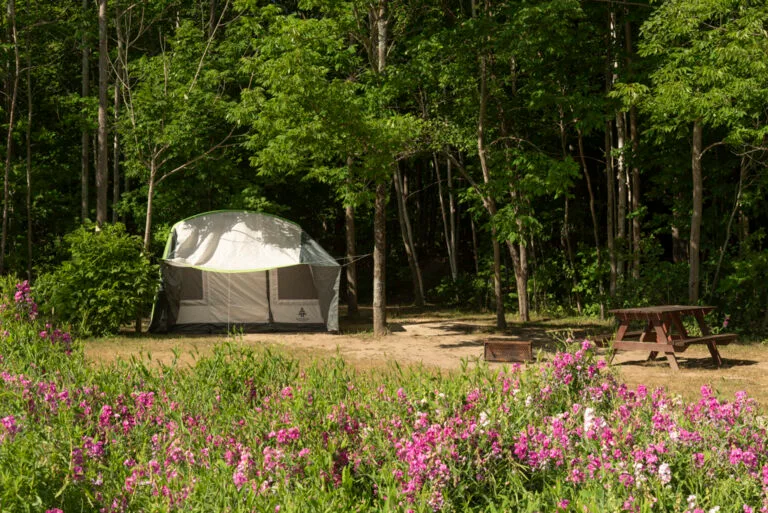
The desire to gather around a crackling fire is a fundamental part of the camping tradition, and the appropriate place to do this is within the controlled environment of your designated campsite. At Miller’s Family Camp, we provide secure, dedicated fire rings at our sites. To practice responsible campfire safety:
- Buy Local Wood: Never transport firewood across long distances to our camp. Transporting wood can inadvertently spread devastating invasive pests, such as the Emerald Ash Borer or the Spongy Moth, which destroy local hardwood forests. Always purchase your firewood directly from our camp store or approved local vendors.
- Burn it Down: Allow your campfire to burn completely down to white ash before retiring for the night.
- Drown the Embers: Never leave a fire unattended or simply cover it with dirt. Drown the coals completely with water, stir the ashes, and apply water a second time until the pit is cool to the touch.
Principle 6: Respect Wildlife
The forests and shorelines surrounding the Bruce Trail are home to a vibrant array of wildlife, including white-tailed deer, red foxes, porcupines, massasauga rattlesnakes, and black bears. Sharing the landscape with these creatures requires quiet observation and strict boundary management.
The Dangers of Feeding and Habitation
Feeding wildlife is an explicit violation of ecological ethics. Whether it is throwing breadcrumbs to ducks, offering nuts to a friendly chipmunk at a lookout, or failing to secure your cooler at night, providing human food destabilizes natural ecosystems. Animals that rely on human handouts lose their natural hunting and foraging instincts, ingest items that cause nutritional deficiencies, and become aggressive toward humans. Store all your food items in animal-proof containers or locked vehicles when staying at Miller’s Family Camp, and never leave garbage exposed at your site.
Understanding the Eastern Massasauga Rattlesnake
The Northern Bruce Peninsula is one of the last secure refuges for the Eastern Massasauga Rattlesnake, Ontario’s only venomous snake. These creatures are inherently timid and prefer to use their camouflaged patterns to hide from human activity. They will only strike if cornered, stepped on, or directly threatened. If you encounter a Massasauga along the Bruce Trail, give it a wide berth, remain calm, and allow it to slide away into the undergrowth. Never attempt to handle, harm, or kill a snake; they are a protected species under Ontario law and play a critical role in controlling local rodent populations.
Principle 7: Be Considerate of Other Visitors
The final principle of Leave No Trace shifts the focus from the physical environment to the human community. Outdoor spaces are shared resources, and maintaining trail courtesy ensures everyone enjoys a peaceful, immersive nature experience.
Trail Etiquette and Right of Way
When navigating the narrow, rocky inclines of the Bruce Trail, understanding basic right-of-way protocols prevents trail confusion and protects safety:
- Yield to Uphill Hikers: Hikers moving uphill have the right of way. Climbing steep terrain requires significant momentum and focus; downhill hikers should step safely to the side of the trail on a durable surface to let them pass.
- Manage Your Noise Levels: Many people visit the Bruce Trail to escape urban noise and immerse themselves in the natural sounds of wind, water, and birdsong. Avoid using portable Bluetooth speakers on the trail. If you prefer to listen to music or podcasts, utilize headphones, keeping one ear free to remain aware of your surroundings or approaching hikers.
- Leash Your Pets: If you are hiking with a dog, provincial park rules and Bruce Trail policies mandate that your pet must remain on a physical leash (maximum 2 meters) at all times. Off-leash dogs can easily terrify local wildlife, damage fragile plant life, and create stressful situations for other hikers who may be uncomfortable around animals.
Conclusion: Becoming a Guardian of the Peninsula
Adopting a “Leave No Trace” mindset is not about restricting your outdoor enjoyment; it is about shifting your perspective from a casual consumer of nature to an active steward of the landscape. Every small decision you make along the Bruce Trail—whether it is picking up a stray piece of plastic left by another hiker, keeping your boots firmly on the marked path, or purchasing local firewood at our camp store—has a compounding positive impact on the health of this spectacular biosphere.
By pairing your adventurous spirit with deep ecological respect, you ensure that the dramatic cliffs, rare orchids, and pristine vistas of the Northern Bruce Peninsula remain completely untarnished for the generations of campers and hikers who will follow in your footsteps.
Are you ready to plan your next eco-conscious wilderness retreat? Our campground provides the perfect sustainable launchpad for your peninsula excursions. Head directly over to our digital booking portal managed by CampLife to reserve your upcoming campsite or cottage stay. For more insider tips on local trail conditions, itinerary planning, or camp life traditions, explore our complete library of resources on the Miller’s Camp Blog. Let’s work together to keep the Bruce beautiful, wild, and green!