The Off-Season Advantage: Why October & November Reveal the True Peace of the Bruce
Summer on Ontario’s Bruce Peninsula is defined by relentless motion. Between June and August, Highway 6 turns into a conveyor belt of weekend traffic, four-hour parking slots at the Grotto sell out weeks in advance, and narrow sections of the Bruce Trail feel congested.
When mid-autumn arrives, that tension vanishes.
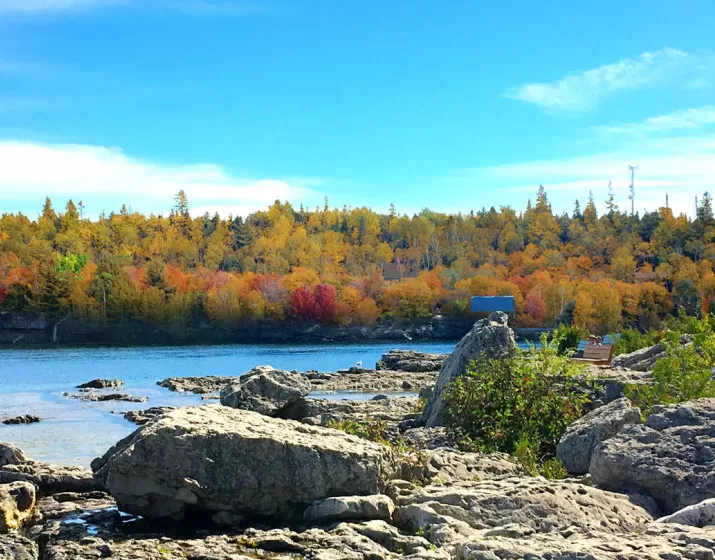
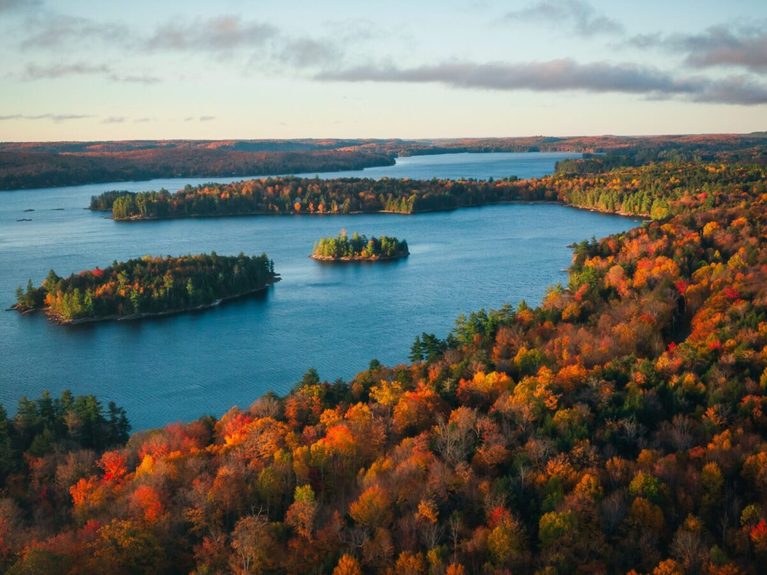
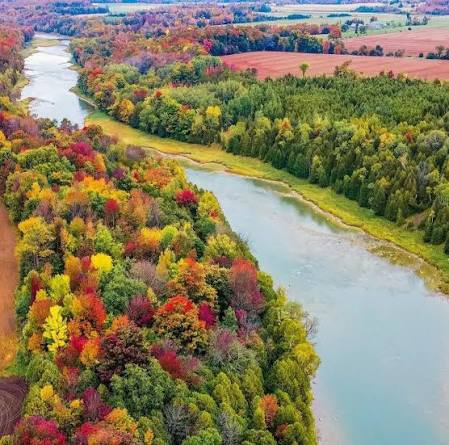
The transition begins in early October as the hardwood canopy burns through its final golds and reds. By November, the leaves drop, exposing raw white limestone cliffs against the deep, icy cyan of Georgian Bay. The air cools, the bugs disappear, and the Niagara Escarpment returns to its natural state: quiet, remote, and elemental.
Visiting during these two months requires deliberate preparation. Services shrink, ferries dock for the season, and daylight narrows. In exchange, you get uninterrupted access to one of Canada’s most dramatic landscapes.
Why visit the Bruce Peninsula during October and November?
Visiting the Bruce Peninsula in October and November eliminates summer overcrowding, drops mandatory timed park parking reservations, and opens the Niagara Escarpment to quiet solitude. Cooler temperatures remove biting insects, while late autumn storms across Georgian Bay deliver dramatic wave activity, clear turquoise waters, and unhindered access to rugged cliffs.
The atmosphere changes completely. During July, human chatter echoes off the cliffs at Indian Head Cove. In November, the only sound is water breaking over submerged shelves of dolostone.
The physical landscape shifts just as dramatically:
- Unfiltered Escarpment Views: Once the leaves fall, hidden geological formations along the cliffs become visible from inland trails.
- Thermal Clarity in the Water: Cold surface temperatures drop plankton levels, turning Georgian Bay into glass with visibility reaching deep into underwater wrecks and limestone shoals.
- Open Trails: Popular trailheads that post “Lot Full” signs by 8:00 AM all summer sit empty. You can hike for four hours near Lion’s Head and cross paths with only two other hikers.
- Active Shorelines: Late fall weather brings heavy winds. Watching rolling waves smash against the sheer cliffs of Cabot Head and Little Cove delivers raw coastal drama that summer visitors never see.
How does the Grotto experience change after Thanksgiving?
After Canadian Thanksgiving, Bruce Peninsula National Park transitions out of strict four-hour timed parking reservations at Cyprus Lake. Visitors reach the Grotto and Indian Head Cove without tour bus crowds, though park amenities close and slippery dolostone limestone requires sturdy footwear and caution around cold, unpredictable Georgian Bay swells.
In summer, securing a time slot at the Grotto feels like booking a high-stakes concert ticket. In late autumn, you pay standard park entry at the automated gate or visitor kiosk, lace your boots, and walk down the Cyprus Lake Trail in peace.
The shoreline cavern itself feels wild again. You can stand beneath the carved limestone overhang without dodging selfie sticks or waiting for swimmers to clear out of the pool. Keep safety front of mind: the wet rock along the shoreline freezes into black ice as temperatures drop in November. The water temperature hovers near 4°C (39°F). Rogue swells occasionally surge over the outer ledges, so keep a conservative distance from the edge.
What hiking conditions should you expect on the Bruce Trail in late autumn?
Late autumn hiking along the Bruce Trail from Lion’s Head to Cabot Head features slick wet limestone, hidden cliff crevices masked by fallen leaves, and gusting offshore winds. Shorter daylight hours require early morning departures, while technical rocky terrain demands waterproof boots, trekking poles, and reliable offline navigation.
The Bruce Trail along the peninsula’s eastern ridge is rugged under ideal conditions. In October and November, conditions demand respect.
1. Leaf Litter and Ankle Hazards
Thick layers of damp maple and beech leaves cover the path. They look harmless, but they mask deep ankle-snapping gaps in the fractured dolostone. Keep your eyes on the trail tread rather than looking up at the canopy while moving.
2. Rapid Light Loss
Sunset arrives early in Ontario during November, especially once the clocks shift for Daylight Saving Time. Deep forest canopies cut ambient light by 4:30 PM. Pack a reliable headlamp with spare batteries on every outing, even if you plan to be back by mid-afternoon.
3. Exposed Clifftop Exposure
Trails along Lion’s Head Provincial Nature Reserve and Halfway Log Dump run directly along cliff edges 200 feet above the water. Autumn winds blowing off Georgian Bay frequently gust between 50 and 70 km/h. Dress in windproof outer layers, stash loose gear, and avoid peering over sheer drops when winds peak.
The Seasonal Trade-Off: Summer vs. Late Autumn
Planning a late-season excursion means accepting reduced commercial convenience in exchange for spatial freedom.
| Trip Factor | Summer Peak (July – August) | Late Autumn Off-Season (Oct – Nov) |
| Crowd Levels | Dense; heavy traffic bottlenecks along Highway 6. | Solitary; near-empty trail networks and beaches. |
| Park Access | Mandatory 4-hour advance booking reservations. | Drive-up access; self-serve kiosks at primary lots. |
| Trail Insects | Mosquitoes, deer flies, and stable flies active. | Completely absent after the first hard freeze. |
| Water Temps | 16°C to 20°C (swimmable in sheltered bays). | 4°C to 10°C (requires cold-water immersion gear). |
| Daylight Window | 14 to 15 hours of daylight. | 9 to 11 hours of usable light. |
| Local Services | All retail, boat tours, and restaurants open. | Skeleton operations; seasonal closures post-Thanksgiving. |
What services and accommodations remain open on the Bruce Peninsula in late fall?
Most seasonal retail shops, boat tours, and restaurants in Tobermory close by late October. Year-round grocery stores, fuel stations, and bakeries remain open in Wiarton and Lion’s Head. Travelers rely on self-catering winterized cottages, private rentals, or mainland motels, requiring advance meal planning before traveling north of Highway 6.
Tobermory shifts into low gear after the MS Chi-Cheemaun ferry makes its final run to Manitoulin Island in mid-to-late October. Boat tours out to Flowerpot Island wrap operations around the third week of October due to turbulent bay waters.
To execute a smooth autumn basecamp, adjust your logistics:
- Base Further South: Consider renting a cabin around Lion’s Head, Miller Lake, or Colpoy’s Bay. These locations keep you within striking distance of the northern trailheads while keeping you closer to year-round grocery stores.
- Stock Provisions Early: Pick up your groceries, firewood, and supplies in Owen Sound or Wiarton before driving up the peninsula. Local dining north of Ferndale becomes limited to select diners and takeout spots running reduced weekend hours.
- Check Park Status: While national park trails remain open for day use year-round, Cyprus Lake campgrounds close their main sites for the winter, and water taps are shut off to prevent pipe freezes. Pack sufficient water for your entire day.
Late Autumn Packing Checklist
Do not head north in November with standard summer hiking gear. Pack for wet cold, abrupt wind changes, and early darkness:
- Footwear: Sturdy, waterproof hiking boots with deep lugged Vibram soles. Wet limestone offers almost zero traction for smooth-bottomed runners.
- Trekking Poles: Indispensable for testing leaf-covered ground and stabilizing descents on slick rock stairs.
- Layering System: Merino wool base layers, a fleece mid-layer, and a seam-sealed hardshell jacket. Avoid cotton sweatshirts; if cotton gets wet from sweat or rain in 5°C weather, hypothermia becomes a genuine risk.
- Navigation: Downloaded offline maps (via AllTrails, Gaia GPS, or Bruce Trail App). Cellular service drops in deep escarpment cuts and along remote shoreline pockets.
- Warm Accessories: Lightweight fleece gloves, a windproof toque, and an emergency thermal bivy bag in your daypack.
The Bruce Peninsula was never meant to be experienced solely through the filter of crowded boardwalks and summer heat. Step out onto the limestone cliffs of the Bruce Trail on a crisp November morning, watch the mist rise off Georgian Bay, and you will see the peninsula as it was always intended: quiet, vast, and completely untamed.